More comfortable living spaces
Adding appropriate insulation to an under-insulated attic can help your home retain warmth in winter and resist unwanted heat in summer.
Shingle Shield USA® · Attic Insulation
Blown-In Fiberglass Insulation
Comfort starts above the ceiling. Shingle Shield USA® helps homeowners explore loose-fill fiberglass attic insulation to reduce heat transfer and support a more comfortable home.
Get a free attic inspection todaySee how the process worksPotential savings vary by existing insulation, climate, and your home. Lower bills are not guaranteed. Ask your local team about service availability and project scope.
Step 1 of 2 · Free inspection request
A better next step starts with your attic. Tell us what you've noticed; your local team will confirm availability.
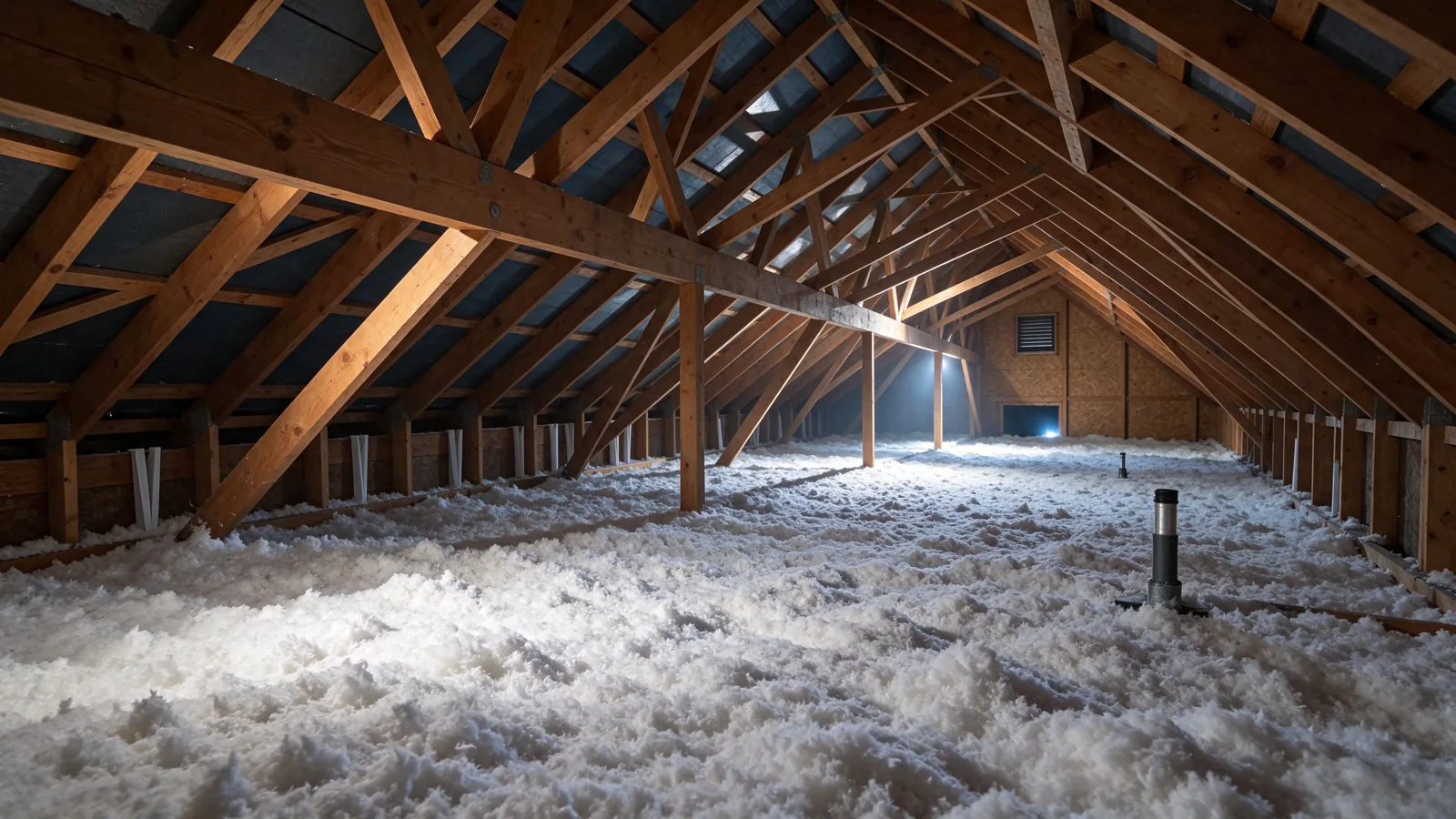
Inspect the attic, understand the options, and get recommendations for blown-in fiberglass, baffles, and preparation tailored to your home.
Try the attic cost calculatorBuilt around your home's comfort
If your attic has thin or uneven insulation, the right upgrade can help. Start with an assessment of the home you have—not a one-size-fits-all promise.
Adding appropriate insulation to an under-insulated attic can help your home retain warmth in winter and resist unwanted heat in summer.
Loose-fill fiberglass creates a thermal layer at the attic floor, helping slow heat movement between the attic and the rooms below.
Improved insulation, with appropriate air sealing, can help reduce the burden on your HVAC system as it maintains indoor temperatures.
Results depend on existing insulation, climate, house construction, air leakage, and heating and cooling use. An assessment helps determine whether an insulation upgrade is appropriate.
Our approach
A considered plan for your attic, from its existing condition to the final installed depth.
Review existing insulation, accessible attic-floor coverage, moisture concerns, and ventilation. Your local team confirms suitability, service availability, and the proposed scope before work begins.
Identify air-sealing needs before adding insulation. Discuss any necessary preparation, safety clearances, and repairs so insulation is not used to cover unresolved problems.
Blow loose-fill fiberglass across the attic floor to the agreed specification. Preserve baffles and airflow at eaves and soffit vents, keeping required ventilation paths and clearances open.
Check coverage and installed depth against the selected product's requirements for the target R-value. Review the completed scope with you; material, climate, and local code determine the specification.
R-value measures resistance to heat transfer. The target and installed depth depend on the selected material, your climate, and local code—not a fixed number of inches for every attic.
In a suitable vented attic, loose-fill fiberglass is placed at the attic floor. Baffles, eaves ventilation, and required clearances must be preserved during installation.
Before you get started
Every attic is different. Your local team can discuss your existing insulation, comfort concerns, and a suitable next step.
Talk to your local teamIt is loose-fill fiberglass distributed with blowing equipment across the floor of a suitable attic. This adds resistance to heat transfer between your living space and attic. It is a different service from roof rejuvenation and is not a roof coating.
Improving an under-insulated attic can help reduce heat transfer and the heating or cooling workload needed to maintain indoor comfort. Any energy savings vary with existing insulation, climate, house construction, air leakage, HVAC performance, and how you use your home. Lower bills or a specific savings amount are not guaranteed.
There is no single depth that fits every home. The appropriate target R-value depends on your climate and local requirements, while the required installed depth depends on the fiberglass product and its coverage specifications. Your local team can assess the existing insulation and discuss a suitable scope.
Air-sealing needs should be assessed before new insulation is installed. Roof leaks, moisture concerns, unsafe conditions, or damaged materials may require attention first. Your local team will discuss necessary preparation and whether it is included in the estimate or requires separate work.
The proposed installation should preserve attic ventilation, including baffles and airflow at the eaves and soffit vents. Insulation belongs on the attic floor without blocking required ventilation paths or violating equipment and heat-source clearances.
It may be suitable when the existing material is dry, in appropriate condition, and compatible with the planned installation. An assessment should identify moisture, contamination, access, or other conditions that need attention. Do not disturb unidentified older insulation yourself; ask your local team about the appropriate assessment.
Call or email the local Shingle Shield USA® team listed below and specifically ask about attic insulation. Share your city or ZIP code and any comfort concerns. The local team will confirm availability, suitability, and project scope. Existing roof-assessment surveys are for roof services, not insulation estimates; ask your team for any insulation-specific written terms.
Shingle Shield USA® · Local teams
Call or email your local team and mention attic insulation. Share your city or ZIP code and any comfort concerns. Your team will confirm service availability, the assessment process, and project scope. Roof quote surveys are not used for insulation requests.
Ask about attic insulation availability
Ask about attic insulation availability
Ask about attic insulation availability
Ask about attic insulation availability
Ask about attic insulation availability
Ask about attic insulation availability
Ask about attic insulation availability
Ask about attic insulation availability
Ask about attic insulation availability
Availability and scope are confirmed by each local team. Attic insulation is separate from Shingle Extender™ roof rejuvenation; roof-treatment warranty terms do not apply to insulation. Ask your team for any insulation-specific written terms.